
KAWASAKI MOTORCYCLE
MOBILE KEY SERVICE
Need a Kawasaki key fast? KIPASS pairing and transponder programming at your bike, no flatbed, no dealer queue. NASTF certified, same-day across San Diego.
 NASTF Certified
 BSIS LCO #6792
 Fully Insured
 Call for Same-Day Service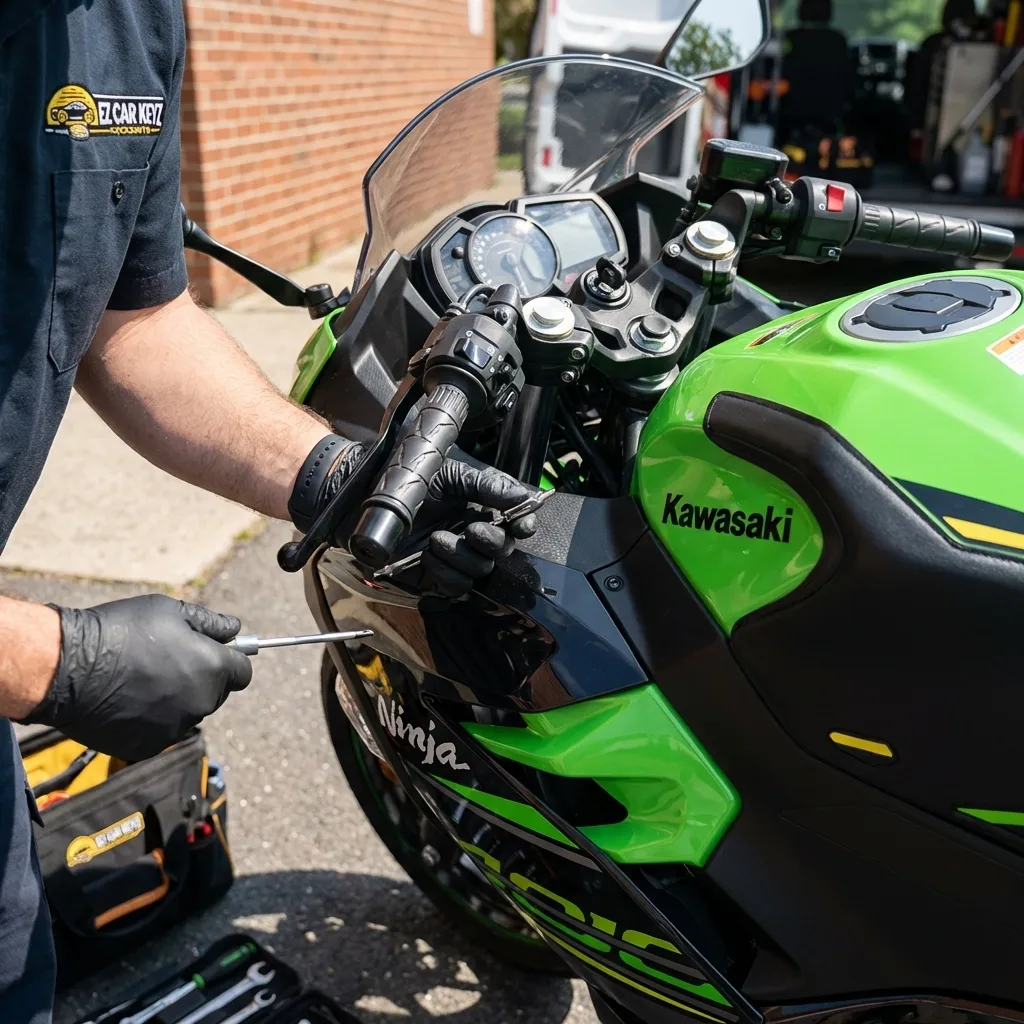
KIPASS Pairing and Smart-ECU Programming at Your Kawasaki
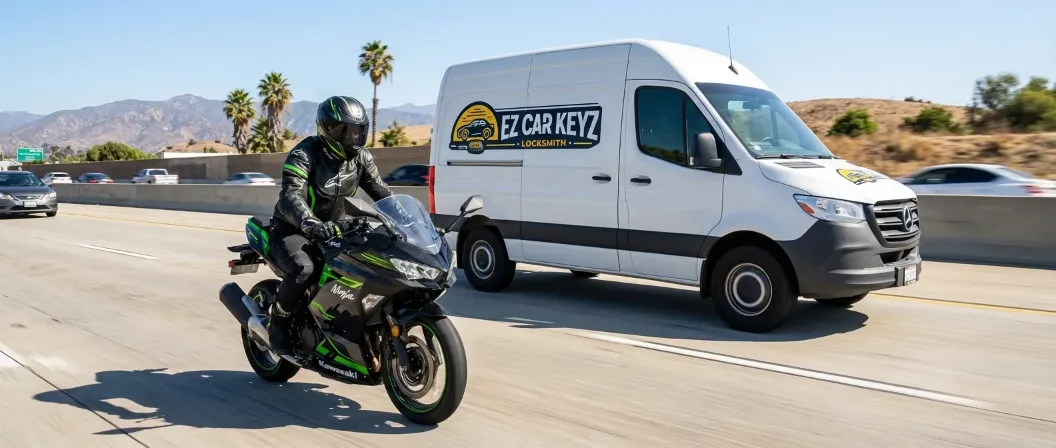
Mobile KDS Tools to Your Kawasaki - Anywhere in San Diego County
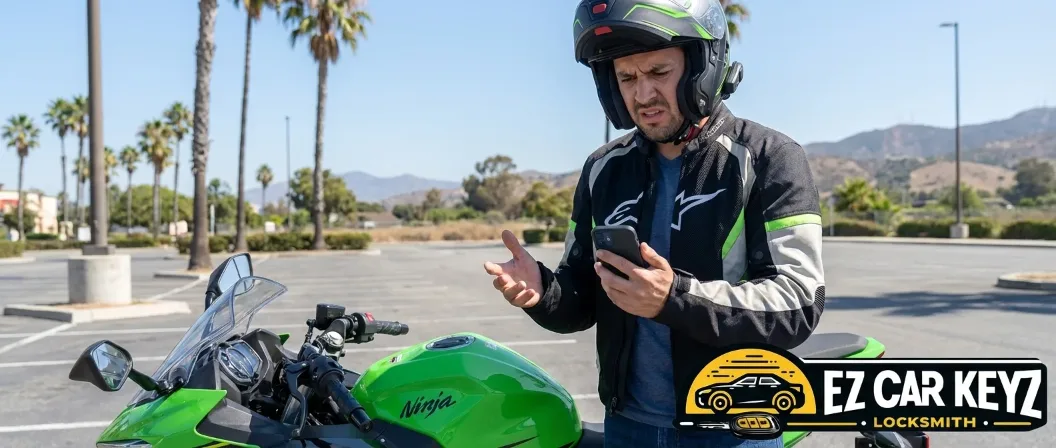
Two Kawasaki calls hit our line constantly. The Ninja rider whose key suddenly stopped turning, and the Concours 14 owner whose KIPASS fob failed at the worst possible moment. EZ Car Keyz handles both. The van runs with KW14 and KW18 blanks, RFID transponder stock, the KDS-compatible programmer, and the diagnostic kit for the three-ECU KIPASS handshake. NASTF VSP credentialed, rolling to your Kawasaki anywhere in San Diego County.
Three Generations of Kawasaki Keys - Brass, RFID, KIPASS
Brass blades, RFID chips, and MISTY-encrypted KIPASS - three eras, one van.
Mechanical Keys: The Early Standard
Kawasaki runs three parallel key systems, and which one shows up depends on the bike. Vintage Vulcans and KZ-series cruisers from the 1980s through the mid-2000s use brass blades with keyway variations (left groove, right groove, Type A, Type B) that handle ignition, gas cap, and seat lock from a single profile. We carry the charts and cut from code on the Xhorse Dolphin.
RFID Arrived in 2008, KIPASS Sits at the Top
Around 2008, RFID transponder chips arrived on Ninja 250 and Concours 14 platforms. Chipped keys store in a limited slot count (typically 6 total per ECU), so managing existing slots matters when a fourth or fifth key gets added. Flagship touring bikes run KIPASS, the Kawasaki Intelligent Proximity Activation Start System, which pairs a proximity fob with an RFID backup blade for keyless start, steering lock, and fuel cap. All three systems live in our van, ready to roll to your address.
What KIPASS Is Doing Behind That Push-to-Turn Switch
MISTY encryption, three-ECU cross-check, and the RFID backup most riders forget.
How the Immobilizer Works
Walk up to a KIPASS-equipped Concours 14 with the fob in your jacket and the bike already knows you are there. The fob throws encrypted radio waves using the MISTY algorithm from Mitsubishi Electric. At roughly 5 feet, the bike detects the signal and unlocks the push-to-turn ignition - no need to pull the fob out. Three separate ECUs (Smart ECU, keyswitch ECU, fuel injection ECU) cross-verify the fob signature before the engine is allowed to run. If the fob coin cell goes flat, you can hold the fob right against the ignition antenna for a short-range RFID backup start.
Which Bikes Carry KIPASS, and Why Programming Needs Real Tools
KIPASS debuted on the 2007-2008 Concours 14 (GTR1400) and has appeared on select flagships since. Kawasaki uses KDS (Kawasaki Diagnostic System) software for programming, and any time an ECU in the three-way handshake gets replaced or reflashed, the whole chain has to re-register. Our NASTF-certified rig carries the KDS-compatible programmer and handles KIPASS service at the bike.
Kawasaki Dealer Invoice vs. One Mobile Visit
Why Kawasaki owners stop calling the dealer after the first quote.
What the Dealership Charges
Stack the dealer breakdown next to a mobile visit and the gap gets uncomfortable. A Kawasaki service ticket runs $100 to $350 for the fob, $100 to $200 for programming, plus a diagnostic line item. Total lands in the $200 to $500 range, the bike usually has to be flatbedded there, and the typical wait is one to five business days when parts ship in.
How the Mobile Visit Compares
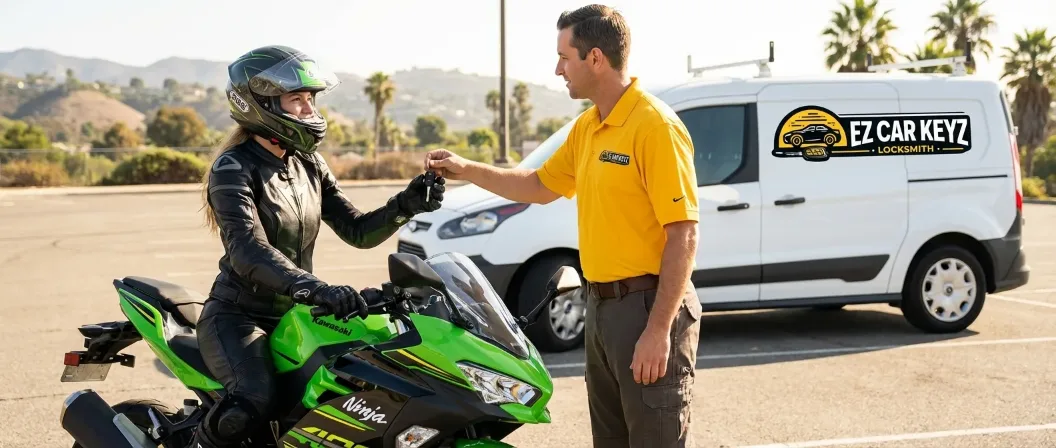
One call to (619) 876-1271, an exact quote on the phone, 25-minute average arrival, and the entire job wraps in one visit. Our van carries KW14, KW18, transponder variants, and the programmer for both mechanical and chipped Kawasaki systems. 50 to 70 percent below dealer rates with no tow involved.
Four Kawasaki Failures We Solve Every Week
Four Kawasaki failures we solve every week at the bike.



Kawasaki Models That Make Techs Earn Their Keep
Key Models to Know
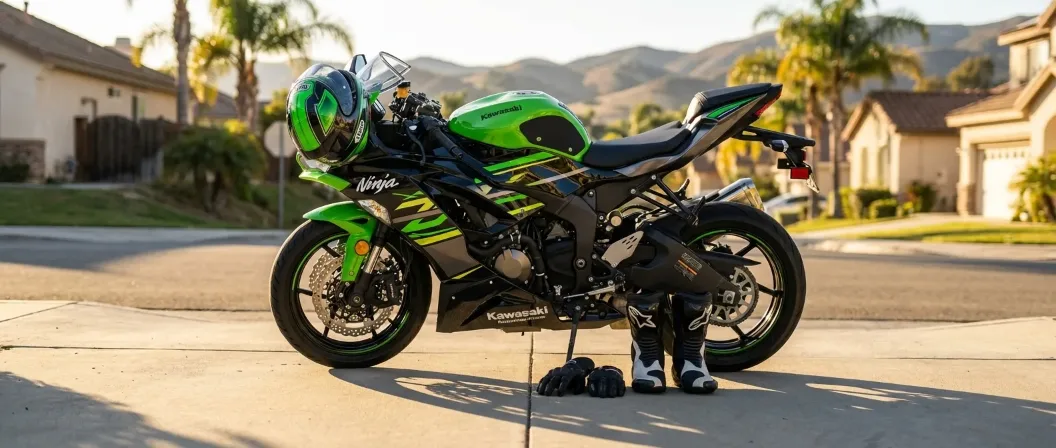
Not every Kawasaki cooperates equally. The Ninja 250 is notorious for being miserable to decode through the ignition itself, thanks to 8 tight-tolerance wafers crammed into a small barrel. The shortcut: read the gas cap or seat lock instead (only 6 wafers, far easier), generate the code in software, and cut from that.
Concours 14 - the Most Involved Kawasaki Job
The Concours 14 (GTR1400) sits at the top of the difficulty curve with the full KIPASS package: proximity fob, RFID backup blade, and three-ECU cross-verification. Programming-tool requirements vary by year. Models from 2007 to 2011 (Ninja 250, Ultra LX) work with standard tools; 2012 and newer often need extra adapters. The van carries the full set so every generation handles the same at your address.
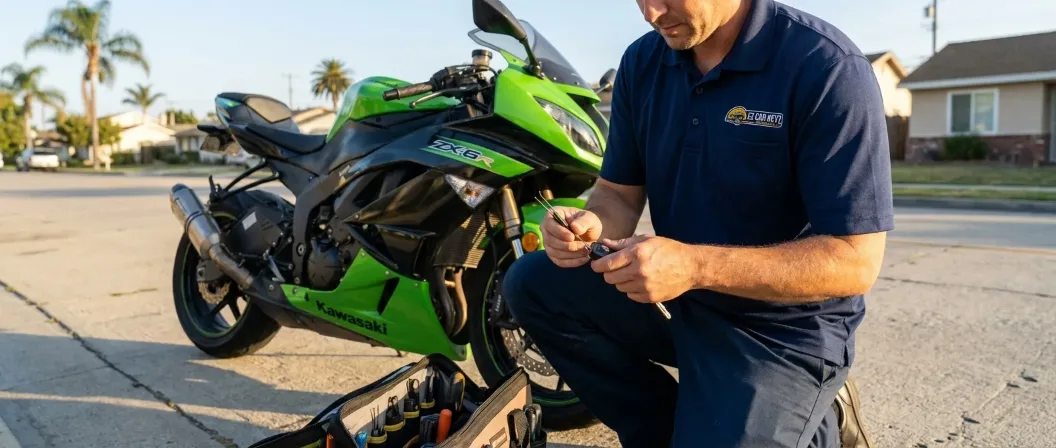
Kawasaki Key Evolution - Mechanical to KIPASS
Early History
You can date any Kawasaki by what is in the ignition. Pre-2008 bikes ride entirely on mechanical keys, no immobilizer. The 2008-and-newer Ninja 250 marked the early shift to transponder chips with ECU programming. By the early 2010s, chipped keys became default across the modern Kawasaki street lineup.
KIPASS at the Top, KLX Dirt Bikes at the Bottom
KIPASS proximity tech debuted on the 2007-2008 Concours 14 and still represents the most advanced Kawasaki key system on the road. At the opposite end, certain KLX dirt bikes still run pure mechanical keys depending on market. Whichever generation you ride, we roll to your bike for same-day completion.
One Call, Riding Again - (619) 876-1271
Mobile service across San Diego County. One call, one visit, your bike starts again.
Over 100 five-star Google reviews