

 Text
Text

 BSIS LCO #6792
 NASTF Certified
Which Key Does Your DeVille Take?
The key types the Deville has used, by year range, with what we bring for each.
A standard metal key blade with a small black pellet visible near the bow. No battery, no buttons, no chip. The car reads the pellet's resistance value every time you turn the ignition.
A chunkier key with lock, unlock, and trunk buttons built into the plastic head. The transponder chip sits hidden inside the housing, and the blade turns in the ignition like a conventional key. Holds a CR2032 battery.
Looks the same as the 2000-2002 version with three buttons and a CR2032 battery. The difference is in how it authenticates: programming requires a PIN from the Body Control Module, which changes the all-keys-lost procedure compared to the earlier generation.
How DeVille Key Security Evolved From 1995 to 2005
Key hardware on the Deville changed with each generation; here is the sequence.
Resistor Pellet Security (1995-1999)
If you lost the only key to a 1995-1999 DeVille, you are dealing with a resistor pellet system rather than a chip. A small carbon pellet is embedded in the key blade, and the car reads its exact resistance before allowing a start. There is no transponder chip inside and no remote buttons on the key itself. Fifteen possible resistance values exist, and the car will not start if the value is off by even one step. Reading the correct value requires professional equipment, so there is no workaround you can do from home when all keys are gone.
Remote Head Key Arrives (2000-2002)
For 2000-2002, GM moved the DeVille to a transponder-based system paired with a remote head key. The key now has lock, unlock, and trunk buttons built into the head, a CR2032 battery inside, and a transponder chip hidden in the plastic housing. Programming runs through the vehicle's computer using an on-board procedure, which keeps costs lower than the dealer alternative. Losing all keys on this generation is still a job for a professional, but the process is faster than the resistor era once we are on-site.
Remote Head Key Continues (2003-2005)
The 2003-2005 DeVille kept the same three-button remote head key and CR2032 battery you saw on the earlier generation, but the programming process changed. A PIN stored in the Body Control Module is required to write new keys, and retrieving that PIN requires server access. When all keys are lost on one of these cars, we pull the PIN on-site using dealer-grade programming equipment and complete the job in your driveway. You do not need to tow the car anywhere.
Cadillac Deville Year Lookup
Tap your year for exact key specs and pricing.
DeVille Key Problems We Fix in San Diego
The Deville key and lock problems we get called about most in San Diego County.
Resistor Pellet Failure
On a 1995-1999 DeVille, the resistor pellet in the blade wears down with regular use. Once the resistance value drifts, the car simply refuses to start because it no longer recognizes the key. We carry a resistance checker on every call, read the value the car expects, and cut a matched replacement on the spot. If this is an all-keys-lost situation, we have the tools to determine the correct value without a working key present.
No-Start After Battery Replacement
A common call we get around San Diego is a 2000-2005 DeVille that will not start after a battery swap. When power is interrupted, the Body Control Module can lose its transponder sync, and the car acts as though it does not recognize the key at all. The key itself is usually fine. We run a relearn procedure using your existing keys, or retrieve the PIN and reprogram from scratch if needed. Most of these calls in the 619 area wrap up in under an hour.
Fob Battery Drain
Your 2000-2005 remote head key stops working the door locks from a distance, but the car still starts fine. That gap in behavior points to a dead CR2032 battery inside the fob. The remote and transponder functions run independently, so one can fail while the other keeps working. We swap the battery on-site and confirm the remote is still paired before we leave.
Ignition Cylinder Wear
San Diego drivers sometimes assume a no-start or a sticky ignition means the key is bad, when the real issue is a worn cylinder. After enough miles, the tumblers inside the ignition get loose and the key binds or will not turn cleanly, even when the security system recognizes it just fine. We diagnose first and tell you honestly whether it is the key, the cylinder, or both before any work is done.
Can You Program a DeVille Key Yourself?
For the 1995-1999 resistor pellet models, there is no self-programming path. The pellet value has to be read and matched with professional equipment, and the programming itself requires a locksmith tool. If all keys are gone, there is no consumer shortcut that gets you back on the road. We carry everything needed and come to your location anywhere in San Diego County.
For the 2000-2005 transponder models, GM does include an on-board relearn procedure. You insert the newly cut key, turn to the ON position, wait just over ten minutes for the security light to go out, then repeat that full cycle two more times. The catch is that you need a correctly cut key with the right transponder chip to start, and the process erases every previously programmed key. If you are already in an all-keys-lost situation, or you would rather not risk losing access entirely, we handle the full job in your driveway for a flat rate.
What You Will Pay
Every quoted price covers the key blank, cutting, programming, and a full test before we leave. What we quote is what you pay.
Why San Diego DeVille Owners Call Us Instead of the Dealer
Over 100 five-star Google reviews from San Diego County drivers back this up. Here is how the two options actually compare.
 Skip the Dealer - Call (619) 876-1271
How It Works
The process for Cadillac keys, in the order it happens curbside.
Tell Us About Your DeVille
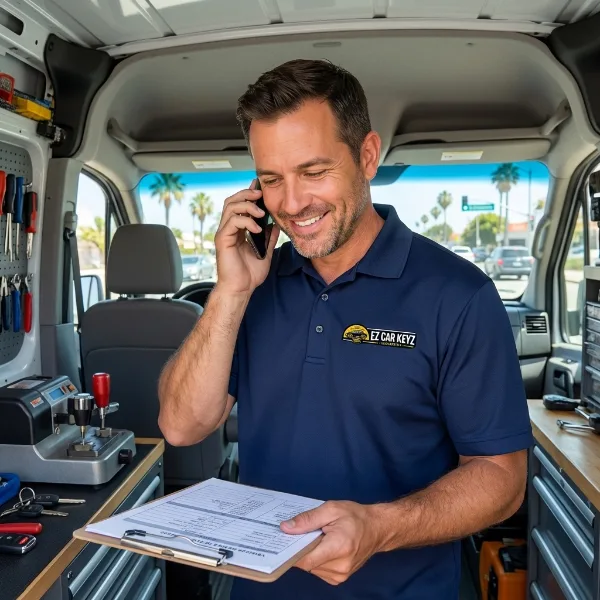
Contact us and give us your Cadillac's exact year and a description of what happened, whether that is all keys lost, a no-start, or a fob that stopped working.
We Come to You
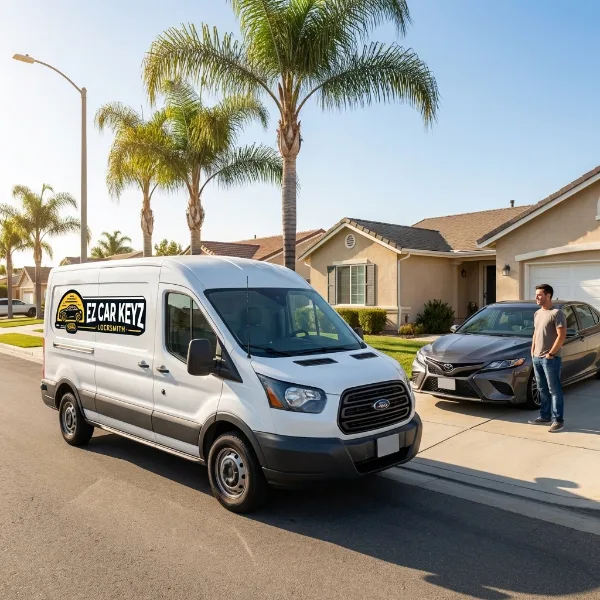
We drive to your location anywhere in San Diego County, whether the car is at your home, a parking lot off the 805, near the I-5, or anywhere else in the area.
Cut and Program on the Spot
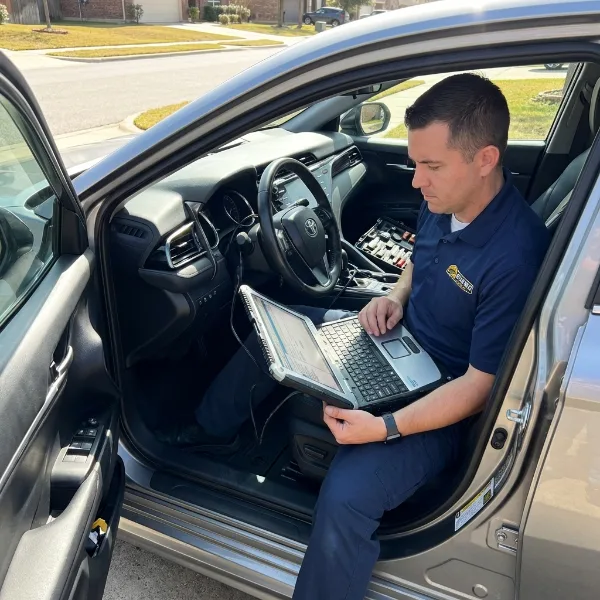
For resistor pellet models we read the correct value and cut a matched key. For transponder models we program using dealer-grade equipment, pulling the PIN when needed for all-keys-lost situations.
Related Services
Related services for your Cadillac, from lockouts to spare keys.






Did You Know?
GM introduced the resistor pellet system back in 1985 as a way to block hot-wiring by requiring the ignition to read a specific resistance value from the key blade before allowing the engine to start. Fifteen different resistance values were used across the vehicle lineup, and presenting the wrong one locked out the starter for several minutes. The 1994-1999 DeVille was among the last Cadillac models to use this approach before GM moved the line to transponder chip technology.
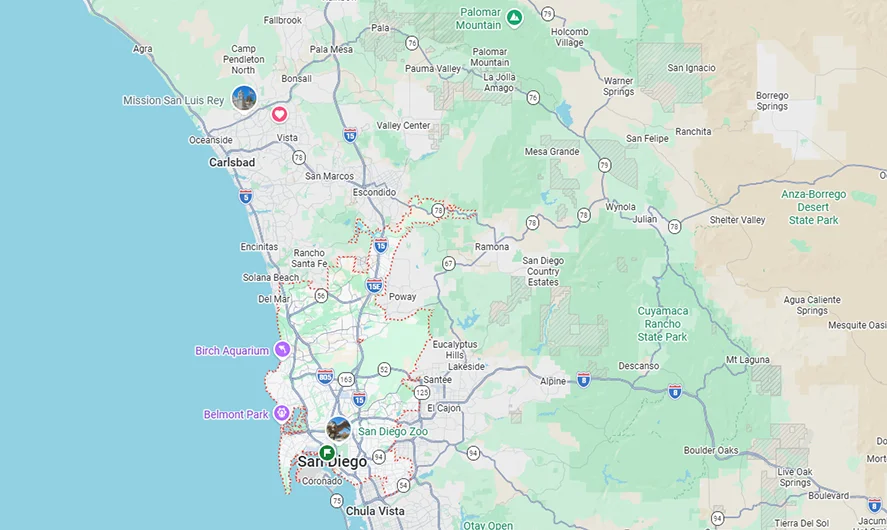
KEY REPLACEMENT ACROSS ALL OF SAN DIEGO COUNTY
We come to you, anywhere in San Diego County. No shop visit, no towing. Our mobile locksmith arrives at your home, office, or roadside.
Cadillac Key in Action
See a Cadillac proximity fob programmed on site.

Cadillac Key Service Call Now
Premium Cadillac key replacement across San Diego County. Same-day mobile service.