


 Text
Text

 BSIS LCO #6792
 NASTF Certified
How Park Avenue Key Security Changed Over the Years
How the Park Avenue key system evolved across model years, and what that means for replacement.
VATS Resistor Pellet Era
Your 1996 to 1998 Park Avenue uses GM's VATS system with a resistor pellet embedded in the key blade. There is no battery and no remote buttons on the key itself. The ignition reads the pellet's resistance value, and if it does not match, the car will not start. Programming requires EEPROM work, which means professional tools and someone who knows the 15 possible resistance codes.
Pass-Key III Arrives
Your 1999 or 2000 Park Avenue jumped to a remote head key with a PK3 transponder chip (Megamos 13 / T5), three buttons, and a CR2032 battery for the remote functions. GM called this system PK3, or Pass-Key III. On-board programming is possible with a working key, and the BCM uses a 4-digit PIN for security. This was a big step up from the old resistor pellet.
PK3+ with Texas 4C
Your 2001 to 2003 Park Avenue upgraded to PK3+ with a Texas 4C transponder chip. Still a remote head key with three buttons and a CR2032 battery. On-board programming works here, but the BCM PIN is required for all key work. The encryption got tighter, which means fewer shortcuts and more reason to call a pro.
Texas Crypto 4D, Final Generation
Your 2004 or 2005 Park Avenue uses a Texas Crypto 4D chip, the most advanced security GM put in this model. Still a three-button remote head key with CR2032 battery. Programming requires OBD-II access with server authentication, and late models may need a Tech2 or MDS tool. This is the generation where DIY gets risky and professional tools really matter.
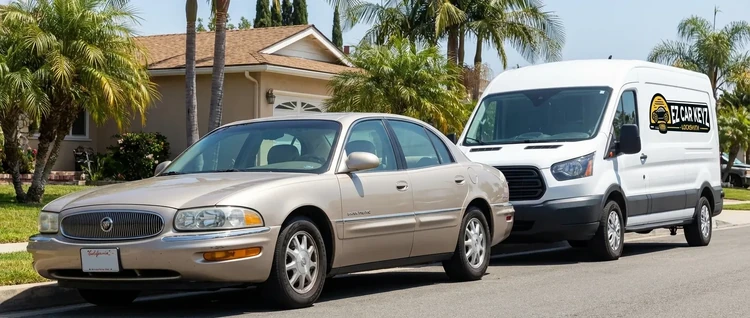
Buick Park Avenue Year Lookup
Tap your year for exact key specs and pricing.
Which Key Does Your Park Avenue Use?
The key types the Park Avenue has used, by year range, with what we bring for each.
A metal key with a small resistor pellet in the blade. No remote buttons, no battery. The car reads the pellet's resistance to decide if it should start.
A plastic-headed key with three buttons for lock, unlock, and trunk. The transponder chip inside talks to your car's immobilizer every time you turn the ignition.
Looks similar to the 1999-2000 key but has an upgraded Texas 4C chip inside. Three buttons, same CR2032 battery, stronger encryption.
The final generation key for the Park Avenue. Three buttons, CR2032 battery, and a Texas Crypto 4D chip that requires OBD-II programming with server authentication.
Park Avenue Key Cost Breakdown
Every price includes the key blank, precision cutting, transponder programming, remote pairing, and on-site testing before we leave.
EZ Car Keyz vs. the Dealer
The dealer orders the part and makes you wait. We show up with it today.
 Skip the Dealer - Call (805) 790-8162
Common Park Avenue Key Problems
What goes wrong with Park Avenue keys in Ventura County, straight from our call logs.
VATS Pellet Failure
First check on a 1996-1998 Park Avenue that will not start: the resistor pellet in the blade. Pellets wear, and once resistance drifts the car thinks it is being stolen. We decode the value on-site and either cut a matched key or install a bypass. Common from Oxnard and Camarillo.
PK3 PIN Lockout
Owners assume the BCM is fried when the car refuses a new key. Real culprit is too many failed programming attempts locking the BCM. Security feature. We reset the PIN through EEPROM or OBD-II by year and get your 1999-2005 Park Avenue accepting keys again.
Door Cylinder Tumbler Wear
Key feels gritty, stiff, or will not turn in the door cylinder. On high-mileage Park Avenues, the wafers wear and bind. We see this in Simi Valley and Thousand Oaks. We rekey or replace the cylinder on-site.
Fob Signal Weakness
Battery corrosion in the remote head is the number one cause of weak fob range on 1999-2005 Park Avenues. Not always the CR2032; cracked solder joints kill signal too. We test transponder and remote separately, recode via OBD-II or replace the fob.
Can You Program a Park Avenue Key Yourself?
No DIY programming procedure exists for these years. The VATS system requires professional EEPROM tools to read and match the resistor pellet code. You need a locksmith or dealer for this one.
Technically possible using the 30-minute ignition relearn cycle: insert the new cut key, turn to ON, wait 10 minutes and 30 seconds for the security light to go off, repeat two more times. But the failure rate is high, around 40 to 60 percent, and a botched attempt can lock your BCM, which turns a $200 job into a $500 repair. We strongly recommend calling us at (805) 790-8162 instead of risking it.
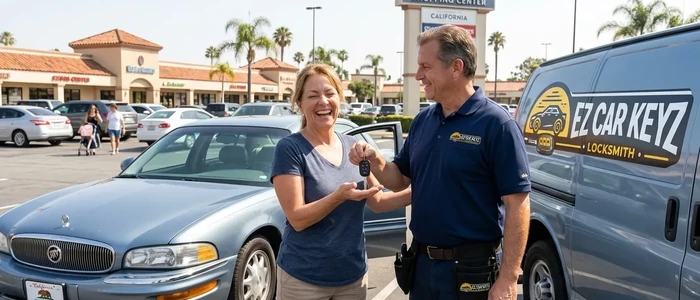
How It Works
What happens between your call and a tested Buick key, in three steps.
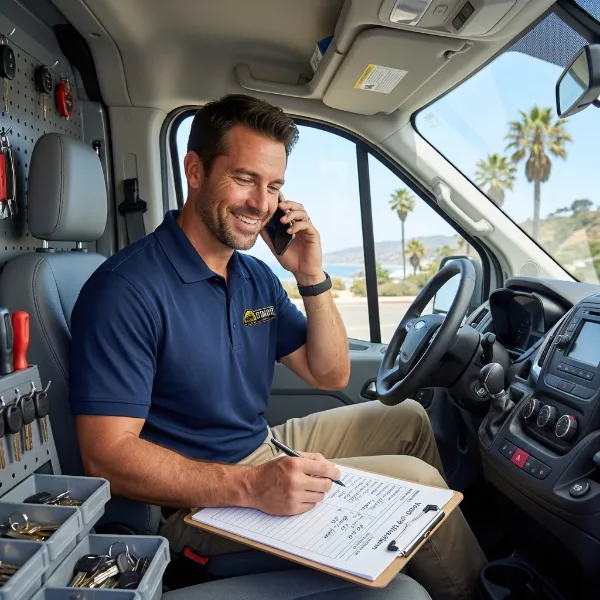
Call or Text Us
Call (805) 790-8162 and tell us your Park Avenue's exact year.
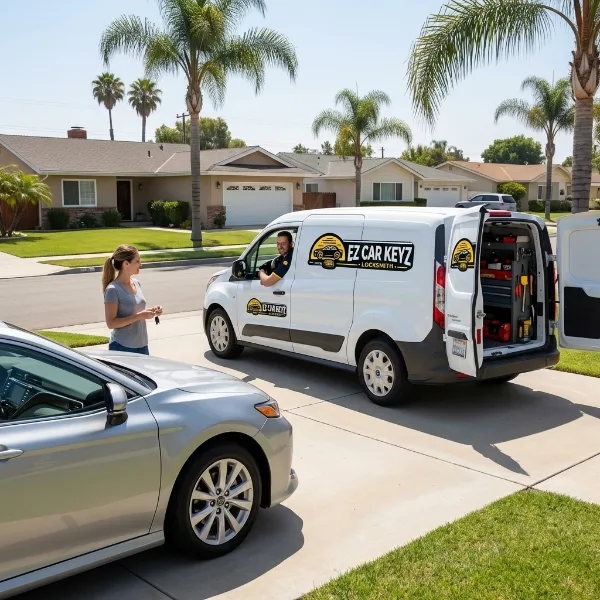
We Come to You
We roll out to your location anywhere in Ventura County.
Cut, Program, Test, Done
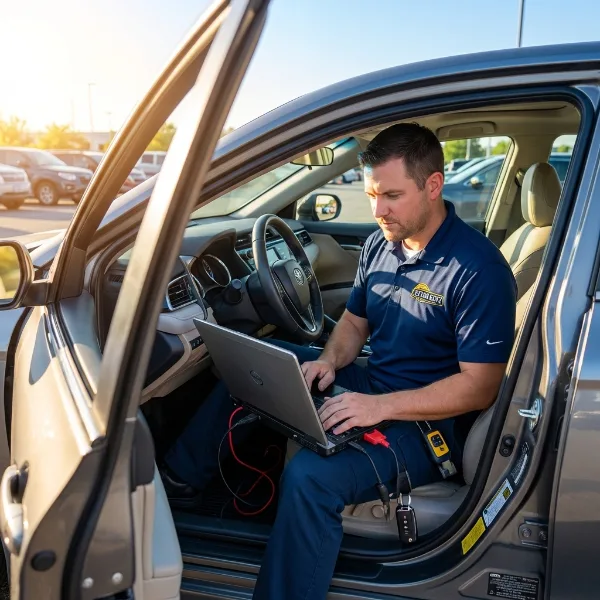
We cut your new key on-site, program the transponder using Autel IM608 or Xhorse VVDI depending on your year, pair the remote, and test everything before we leave.
Related Services
Beyond key replacement, the other Buick work we take on in Ventura County.










Did You Know?
You would not guess it, but the 1996 to 2005 Park Avenue was the last Buick to use GM's legendary 3800 Series II V6 engine. That motor is famous for being nearly indestructible, and GM put it in over 25 million vehicles across dozens of models. The Park Avenue Ultra got the supercharged version, which made it one of the quickest full-size sedans you could buy in the late 1990s.
KEY REPLACEMENT ACROSS ALL OF VENTURA COUNTY
We come to you, anywhere in Ventura County. No shop visit, no towing. Our mobile locksmith arrives at your home, office, or roadside.


Buick Key Service Demo
Watch a Buick key get cut and programmed at the customer's location.

Buick Key Replacement Call Now
Fast mobile Buick key service across all of Ventura County. Call for a quote.